
Last updated September 23, 2026
Free visual inspection and a written scope of work before any mitigation begins - photos, moisture readings, and drying logs go in your claim file
The scope we write is the scope we bill. Anything new gets shown to you, in writing, before we touch it.
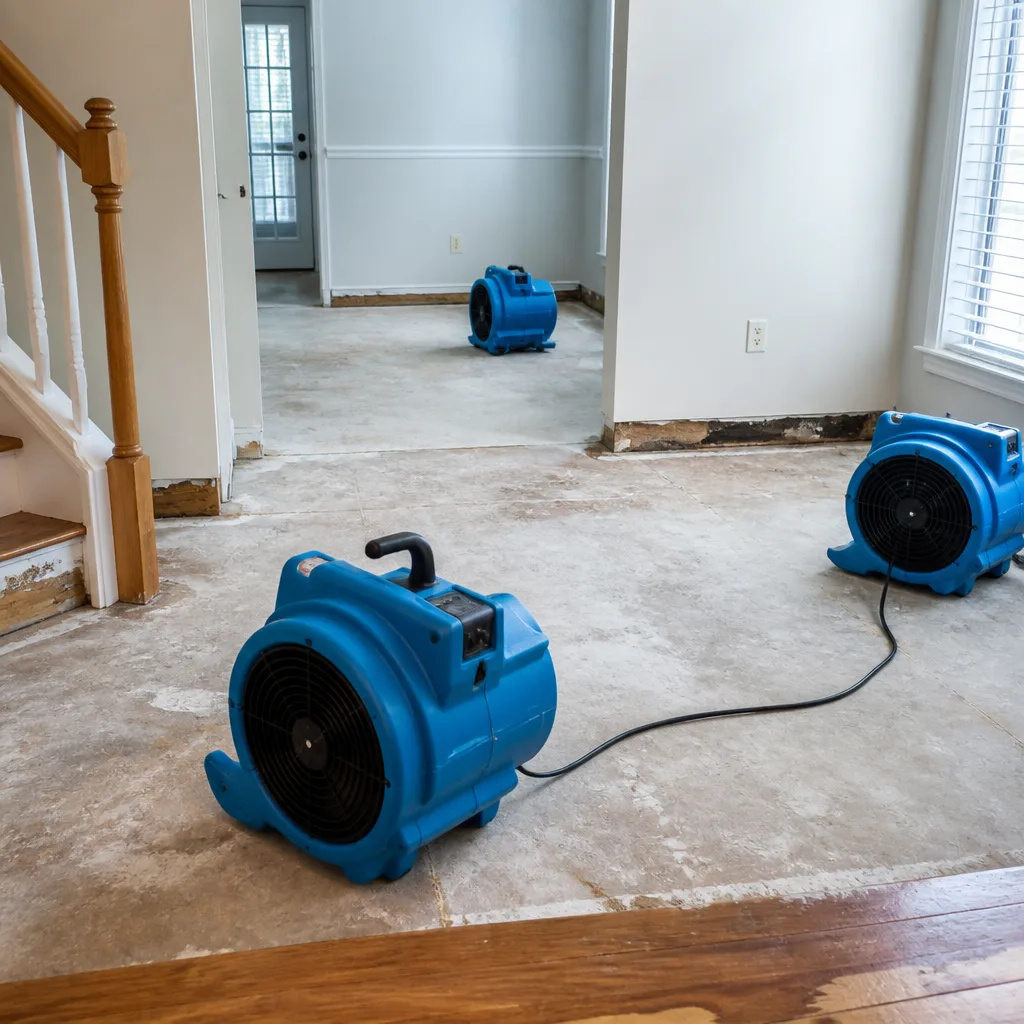

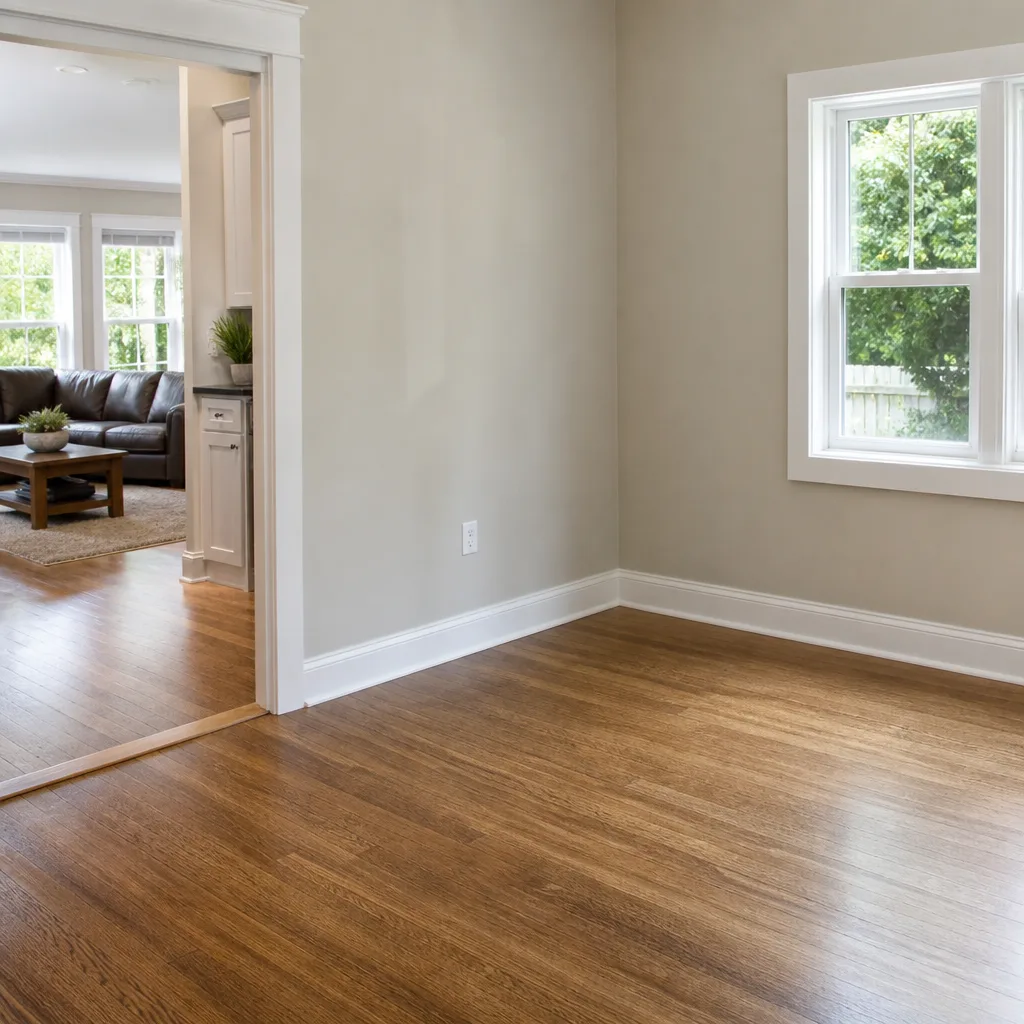

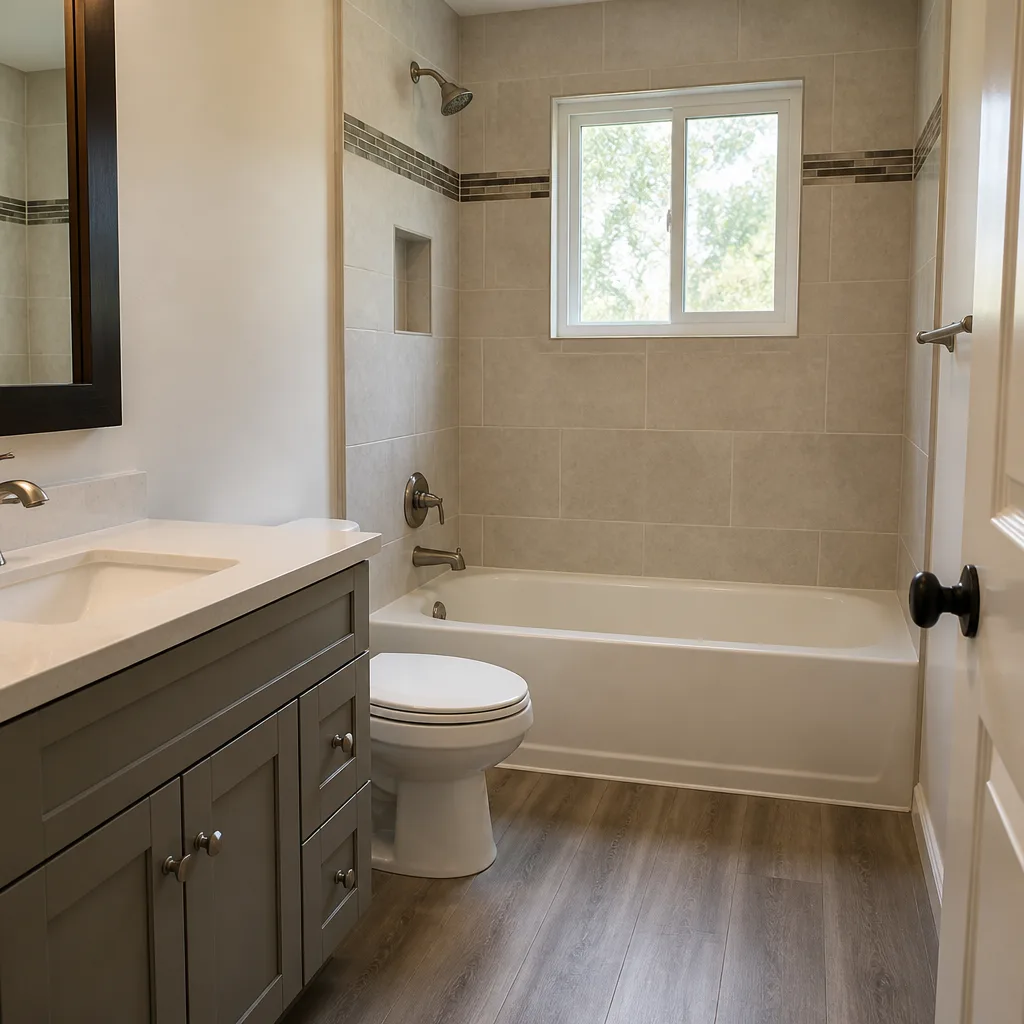

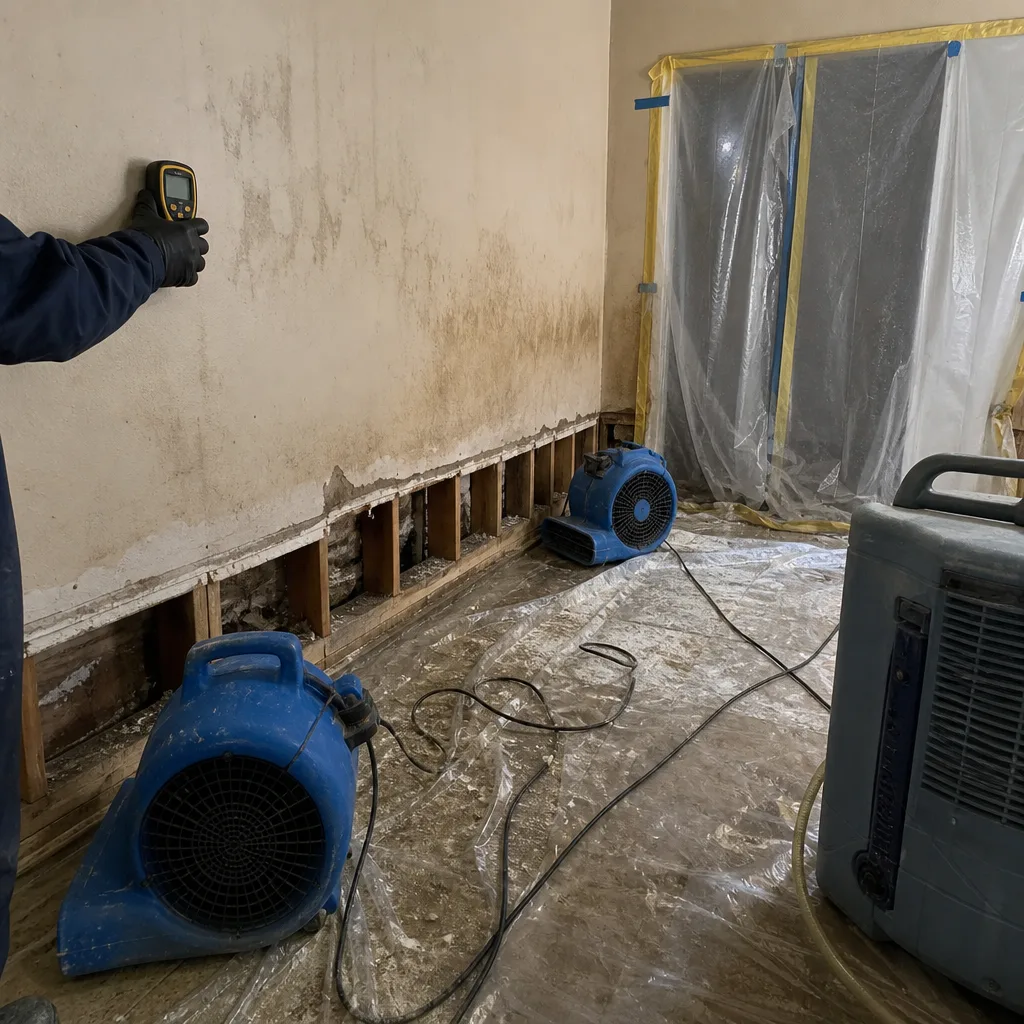 Before
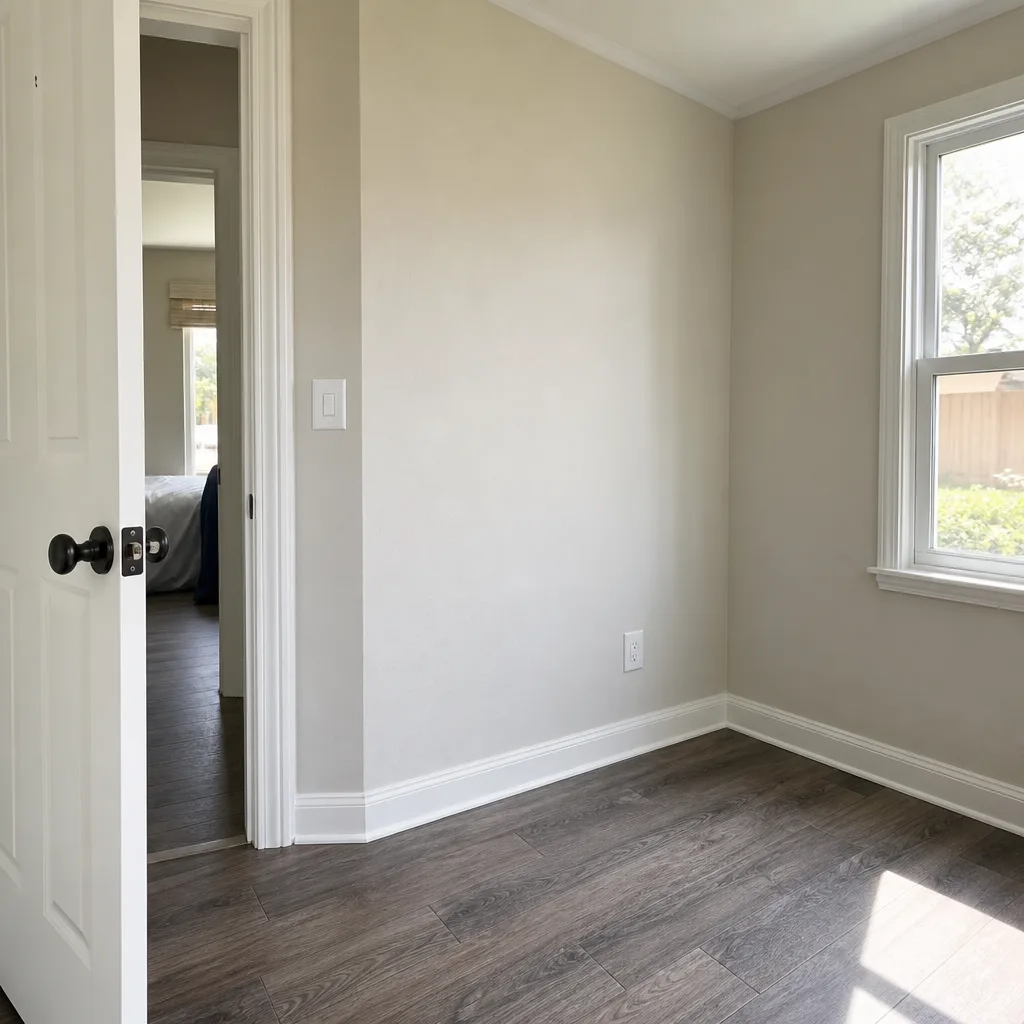 After
After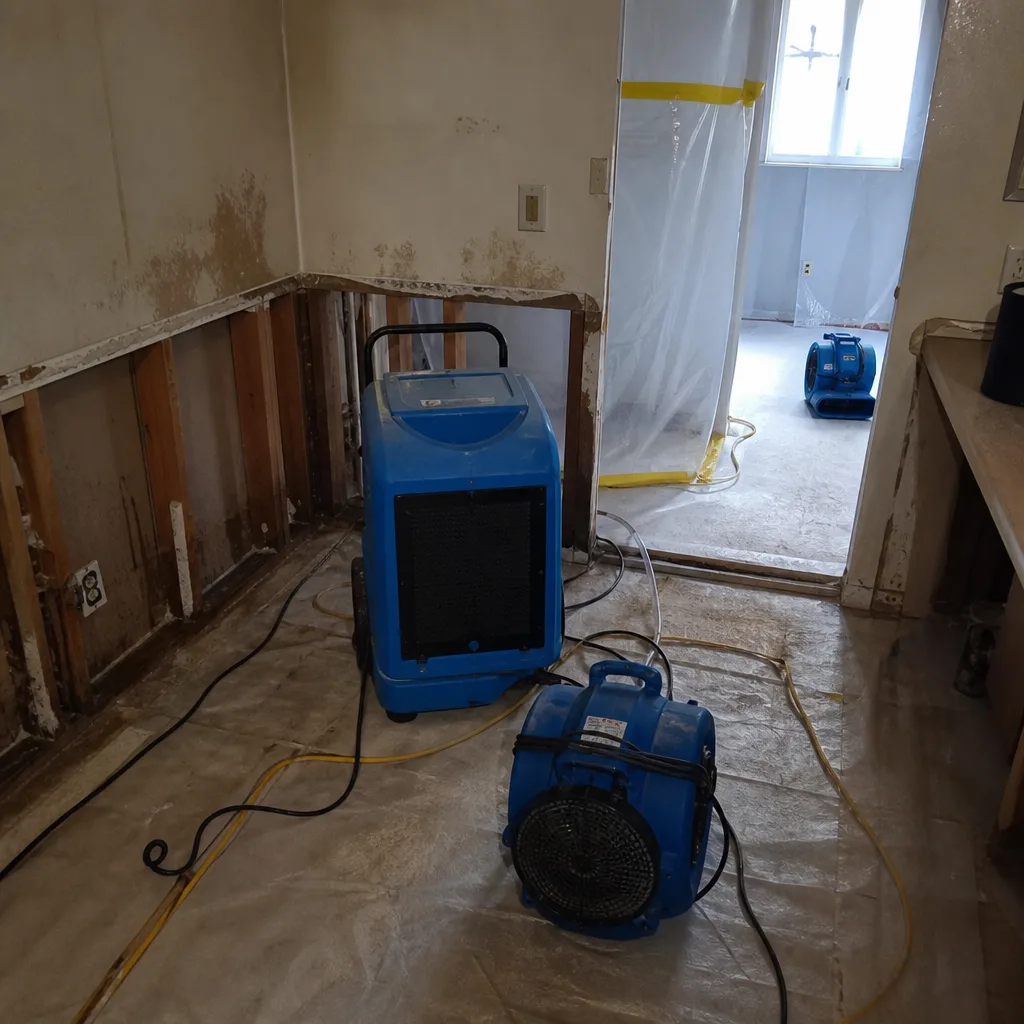 Before
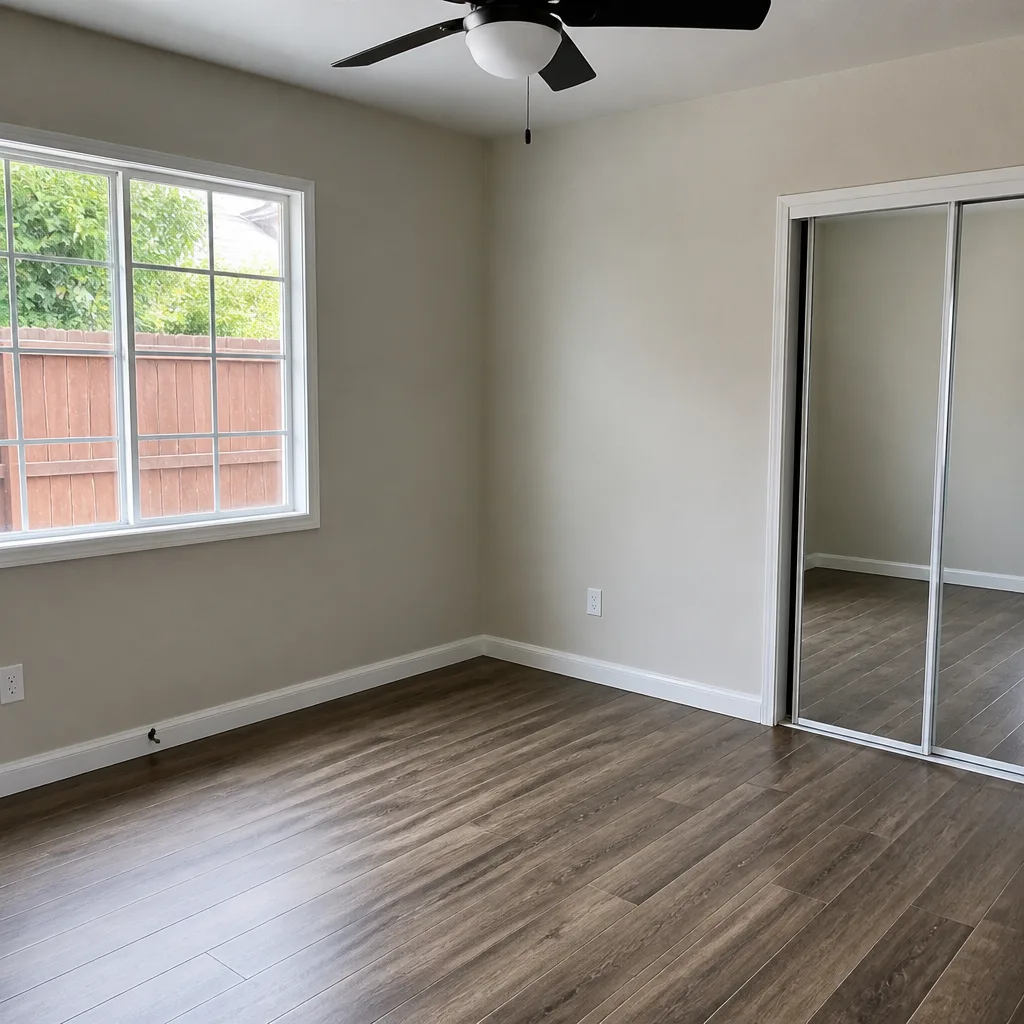 After
After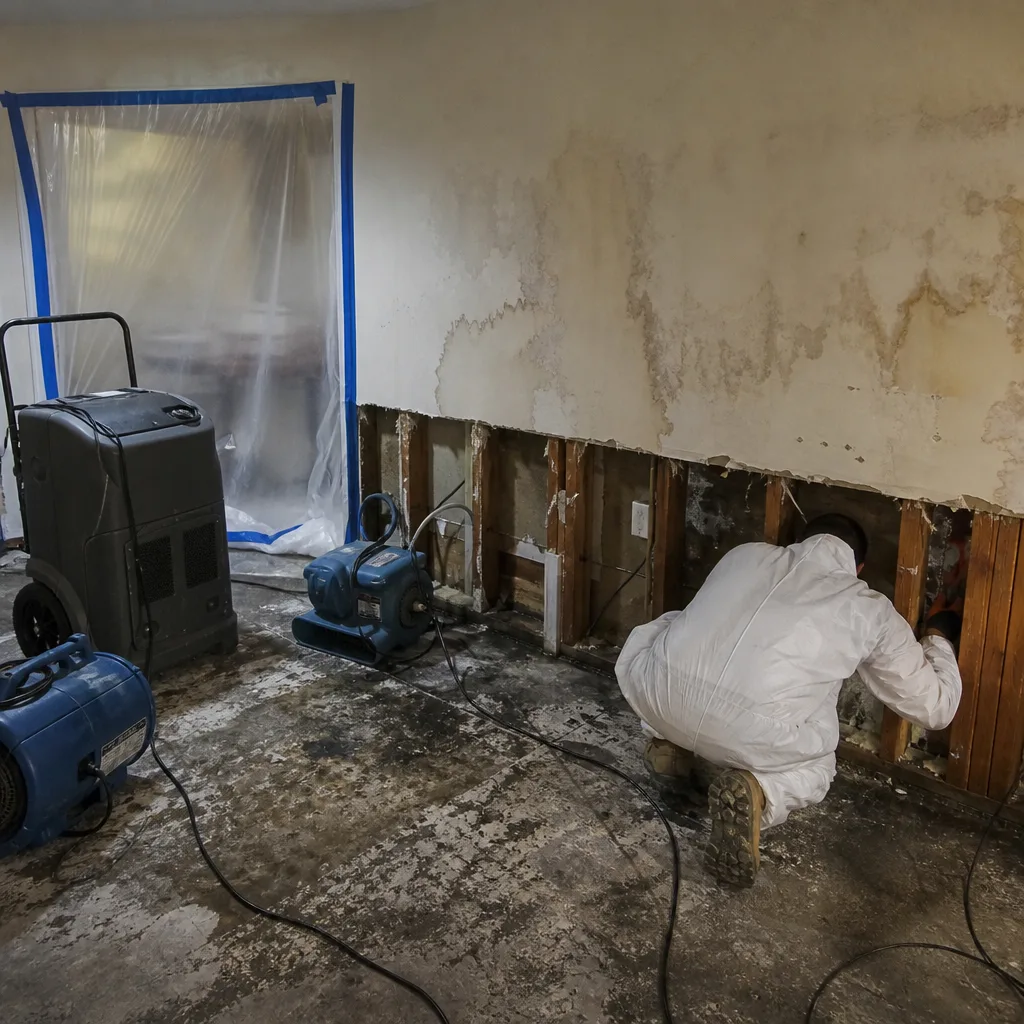 Before
 After
AfterWater Damage Restoration Maintenance Checklist for Chula Vista Homeowners
Most water damage claims in Chula Vista are underpaid or denied not because the damage wasn’t real, but because the homeowner cannot prove the wall was dry before the pipe burst. Insurers now routinely request pre-loss documentation, and a photo of a clean basement from 2019 proves nothing about moisture content. We’ve handled over 12,000 restorations since 2011, and the claims that move fastest share one trait: the owner had dated baseline readings. This guide replaces vague visual inspections with a numbered log format that produces defensible documentation. You’ll learn the six highest-probability intrusion points specific to Chula Vista construction, target moisture readings for coastal humidity conditions, and how to store records so they qualify as pre-loss evidence under most California homeowner policies. For a deeper dive, see The Complete Guide to Damage Restoration in Chula Vista.
Quick Answer
A Water Damage Restoration maintenance checklist for Chula Vista homeowners is a quarterly inspection system that records baseline moisture readings, photographs six critical intrusion points, and stores dated documentation to support future insurance claims. In Chula Vista’s 65-75% average relative humidity, drywall should read below 12% moisture content and wood framing below 15% on a pin-type meter. Without these baselines, insurers have no way to distinguish pre-existing dampness from sudden water loss damage.
Table of Contents
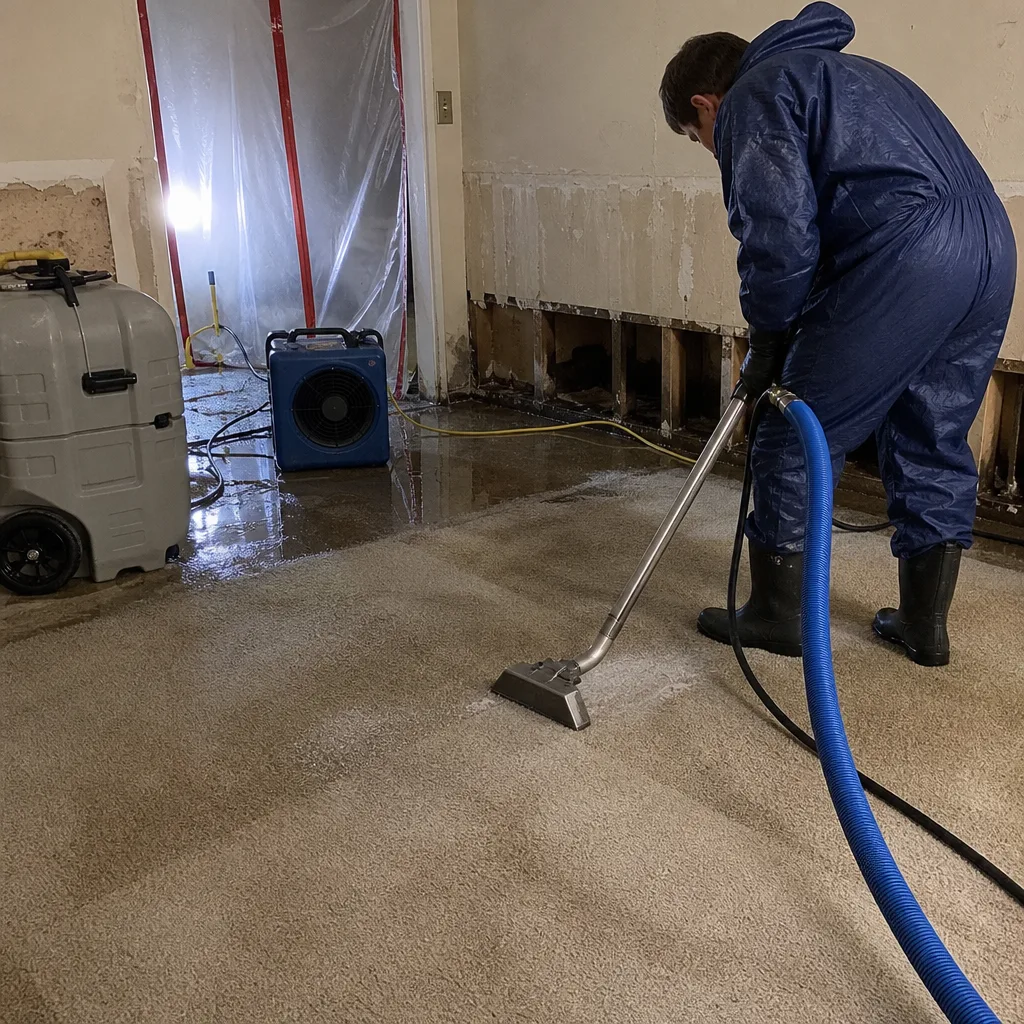
- Why Baseline Readings Matter More Than Visual Inspections
- Chula Vista Humidity Targets: What “Dry” Actually Means Here
- The Six Highest-Probability Water Intrusion Points in Chula Vista Homes
- Room-by-Room Baseline Moisture Log Template
- Quarterly vs. Annual: Inspection Intervals by Component
- Documenting for Insurance: Photo Storage and Legal Standards
- When a Reading Exceeds Threshold: Specific Next Steps
- Common Mistakes to Avoid
- When to Call a Professional
- Frequently Asked Questions
BeforeAfterWhy Baseline Readings Matter More Than Visual Inspections
Visual inspections fail because water damage is invisible until it’s expensive. By the time drywall discolors or baseboards swell, the cavity behind them has been wet for days or weeks. In our work across Chula Vista, we’ve opened walls that looked pristine from the living room and found saturated insulation, compromised fire blocks, and early-stage mold growth on the cavity side of the sheathing.
The documentation gap costs homeowners their claims. An adjuster examining a water-damaged kitchen in Otay Ranch has no objective way to determine whether the moisture meter reading of 28% on the drywall represents sudden pipe failure or chronic humidity infiltration. The homeowner says the pipe burst Tuesday. The insurer suspects the wall has been damp since last winter’s rains. Without a dated baseline reading from before the loss, the homeowner loses this argument every time.
A proper maintenance checklist produces three documents: a moisture log with numerical readings, a photo record with timestamps, and a written observation note. Together these create what claims professionals call a “pre-loss condition record.” Under most California homeowner policies, this documentation shifts the burden of proof. The insurer must demonstrate that damage existed before the documented date rather than the homeowner proving it did not.
We built DryMark Restoration Chula Vista home around this exact problem. Our founder, Alicia Brennan, spent years as a claims adjuster watching homeowners lose legitimate claims for lack of documentation. The Haven Standard, Clause 1, requires a written price before work begins on every job precisely because documentation gaps create disputes that hurt everyone. The same principle applies to prevention: a written record before damage occurs prevents disputes before they start.
The checklist format below uses a pin-type moisture meter, which costs $40-$80 at hardware stores in Chula Vista. Pinless meters are faster but less accurate on textured surfaces and multiple material layers. For baseline documentation, accuracy matters more than speed.
Chula Vista Humidity Targets: What “Dry” Actually Means Here
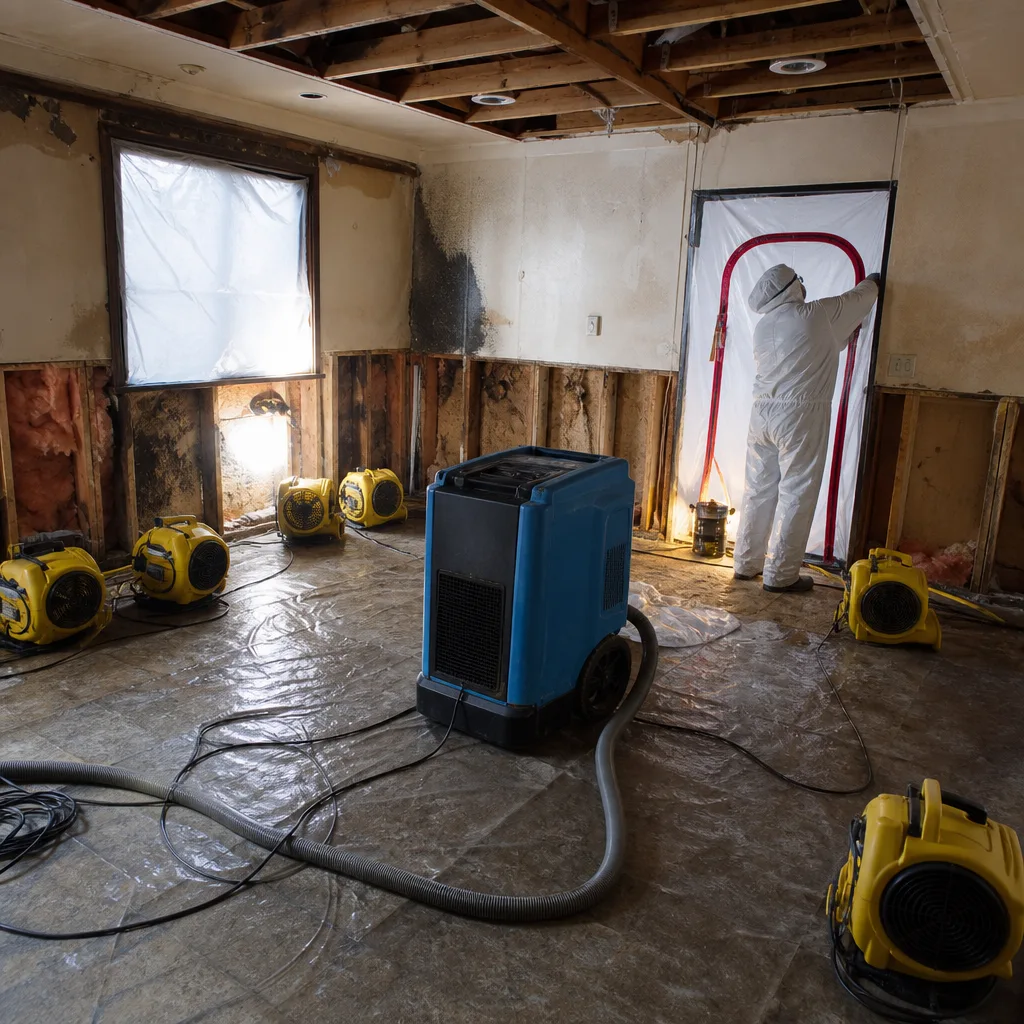
National drying standards assume indoor relative humidity of 30-50%, typical of conditioned homes in Phoenix or Denver. Chula Vista’s coastal climate operates differently. Summer marine layer moisture pushes outdoor humidity above 80% for weeks. Winter Santa Ana conditions drop it below 30%. Homes without whole-house dehumidification ride this wave, and “normal” moisture content for materials shifts with the season.
We document drying jobs to IICRC S500 standards using equipment from Dri-Eaz and Phoenix. Those standards define “dry” as a moisture content within 4 percentage points of a documented dry standard for that material in that geographic region. For Chula Vista, we establish these regional baselines:
- Drywall (interior, conditioned space): 8-12% moisture content. Readings above 14% indicate active water intrusion or failed vapor barrier.
- Wood framing (pine, fir, engineered joists): 10-15% moisture content. Readings above 17% risk fungal growth; above 20% warrants immediate investigation.
- Concrete slab (at grade, interior): 75-85% relative humidity using in-situ probes. This is the standard test for flooring adhesion failure risk.
- Subfloor (plywood, OSB): 12-16% moisture content. Engineered wood flooring manufacturers typically void warranties above 75% RH at the slab or 14% in the subfloor.
These targets differ from desert inland readings by 2-4 percentage points. A homeowner in Chula Vista measuring 13% on drywall in August may be within normal range; the same reading in January suggests a problem. Seasonal logging captures this variation.
Psychrometric data, the measurement of air temperature, relative humidity, and vapor pressure, explains why coastal homes behave differently. Vapor pressure differential drives moisture through materials. When warm, humid outdoor air contacts cooled interior surfaces, condensation occurs at the dew point. In Chula Vista, this happens routinely on slab edges and north-facing stucco walls where insulation is thin. A baseline log that ignores season produces false alarms in summer and misses problems in winter.
Tertiary drying, the final phase of structural drying after bulk water removal and evaporation, often takes longest in coastal conditions. We see this in homes near the bay in Chula Vista where cross-ventilation is limited by neighboring structures. The maintenance checklist accounts for this by specifying different inspection frequencies for enclosed versus well-ventilated spaces.
The Six Highest-Probability Water Intrusion Points in Chula Vista Homes
Chula Vista’s housing stock spans 1920s Craftsman bungalows near Third Avenue to 1990s stucco tract homes in Eastlake and Rolling Hills Ranch to 2010s infill near the bay. Construction methods vary, but six failure points appear repeatedly in our restoration records. These locations should be inspected and logged quarterly.
1. Concrete Slab Foundation Edges
Homes built between 1970 and 1995 in Chula Vista commonly use post-tensioned or conventional slab-on-grade construction with minimal perimeter drainage. The slab edge, where concrete meets soil and stucco or siding, is the highest-frequency failure point we encounter. Capillary wicking draws groundwater up the slab face. Seasonal expansion and contraction crack the stucco-to-slab seal. In homes near the Sweetwater Marsh or other high water table areas, we’ve measured slab relative humidity above 90% at the perimeter while interior readings remained normal.
Inspection protocol: Probe 2 inches above the slab line at each exterior wall corner and at 10-foot intervals. Photograph the stucco-to-slab joint condition. Note any efflorescence, the white powdery deposit that indicates water migration through concrete.
2. HVAC Condensate Drain Lines
Chula Vista’s cooling season runs May through October, with heat pumps and central air producing condensate daily. The secondary drain pan under the air handler is required by California code but often installed without a float switch or overflow sensor. When the primary line clogs, water overflows the pan and saturates the platform or closet base. We’ve restored 200+ homes where this single failure point caused $15,000-$40,000 in damage.
Inspection protocol: Run the system for 15 minutes and verify flow at the exterior termination. Check the secondary pan for standing water or rust. Log the condition of the P-trap, which prevents sewer gas entry but also traps debris.
3. Stucco Weep Screed and Flashing
Three-coat stucco with weep screed at the slab line was standard in Chula Vista tract construction through 2005. The weep screed provides drainage at the base of the stucco coat, but it is often buried by landscaping, concrete flatwork, or soil. Water trapped behind the stucco has no exit and migrates inward through the paper-backed lath. In homes in Rancho Del Rey and Terra Nova, we’ve removed stucco sections where the OSB sheathing behind had reached 35% moisture content with no visible interior damage.
Inspection protocol: Verify 2-inch clearance below weep screed. Probe the sheathing through electrical box openings or hose bib penetrations where accessible. Photograph any stucco cracking pattern, especially horizontal cracks at the slab line.
4. Supply Line Connections at Toilets and Sinks
Chloramine-treated municipal water in Chula Vista accelerates corrosion of brass and galvanized fittings. Flexible braided supply lines, common retrofits, have a 5-7 year service life in this water chemistry. The connection at the toilet shutoff valve is the most frequent source of sudden water loss in our records, often failing when the homeowner is away.
Inspection protocol: Wipe connections dry, run water for 2 minutes, wait 10 minutes, then check for moisture with tissue paper. Replace braided lines showing corrosion, kinking, or date stamps older than 5 years. Log manufacturer and installation date.
5. Roof Penetrations and Valley Flashing
Chula Vista’s mild climate extends roof life but also masks deterioration. Tile roofs common in 1980s-2000s construction rely on underlayment for waterproofing; the tile itself is cosmetic. When underlayment fails at valleys or pipe penetrations, water enters the battens and travels horizontally before showing interior signs. In the winter of 2023, we handled multiple claims in Chula Vista Hills where valley leaks had saturated rafter bays for months.
Inspection protocol: From the attic, inspect valley underlayment for staining or daylight. Check pipe boot seals for cracking. Log any prior repair history, as layered repairs often trap moisture.
6. Window and Door Flashing Integration
Retrofit window installation in stucco homes, common in 1990s-2010s energy upgrades, often omits proper sill pan flashing. Water enters at the sill, migrates through the rough opening, and damages the jack studs and header. In Chula Vista’s coastal humidity, this slow leak can sustain mold growth without ever producing visible interior water.
Inspection protocol: Probe the drywall or trim adjacent to window sills. Check exterior caulking continuity at the sill-to-stucco joint. Operate windows during rain or simulate with a hose at low pressure, observing interior sill corners for 10 minutes.
Room-by-Room Baseline Moisture Log Template
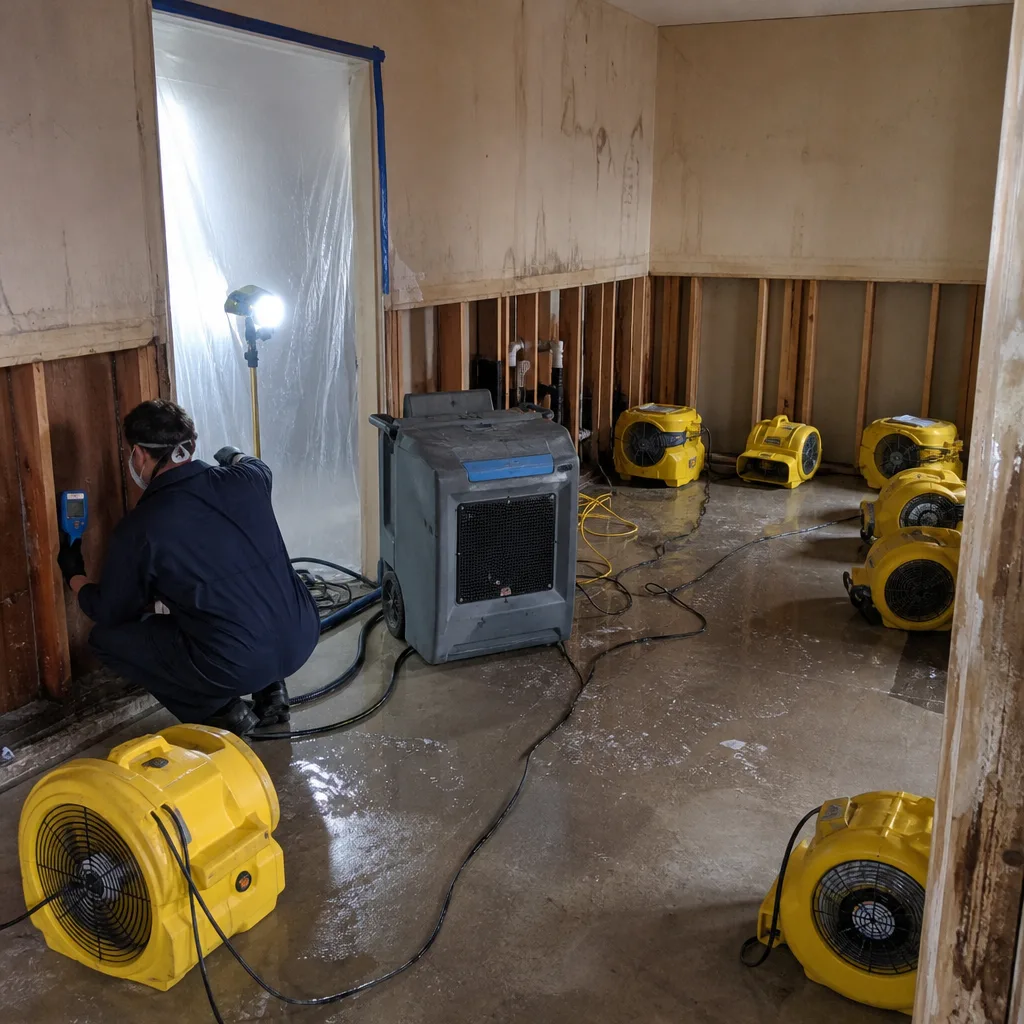
The log format below produces documentation that insurers recognize. Each entry includes location, material, reading, instrument, date, and photograph reference. Store logs in cloud storage with automatic date stamping, not on a single device.
Kitchen
- Sink base cabinet floor: pin meter, probe at rear corner nearest supply lines. Target: <14% wood, <12% composite.
- Dishwasher adjacent base cabinet: same protocol. Dishwasher leaks typically show here before the subfloor.
- Refrigerator water line connection: probe wall behind refrigerator. Braided lines fail at the compression fitting.
- Slab perimeter at exterior walls: two readings per wall, 2 inches above slab. Target: <14% or note stucco condition.
Bathrooms
- Toilet supply connection: tissue test plus pin meter on adjacent baseboard.
- Shower/tub surround: probe drywall at 12 inches above rim, corners only. Target: <12%. Caulk failure shows first at corners.
- Vent fan duct termination: verify exterior flap operation. Stuck flaps trap shower moisture in the duct.
- Slab perimeter: same as kitchen.
Laundry Room
- Washer supply boxes: probe interior of box, both hot and cold sides. Target: <12% on surrounding drywall.
- Drain standpipe overflow rim: verify height 18-30 inches per code. Lower rims overflow during drain backups.
- Dryer vent termination: check for lint accumulation and proper flap closure. Blocked vents raise humidity in the room.
HVAC Closet or Attic
- Platform or pan: pin meter on plywood, visual check for staining.
- Condensate line flow test: run system 15 minutes, verify exterior drip.
- Attic sheathing (if accessible): probe at north-facing slope and near any penetrations. Target: <15% wood.
Garage
- Slab at driveway apron: probe 12 inches inward from overhead door. This joint cracks and admits surface water.
- Water heater pan and T&P valve discharge: verify pan has no holes, T&P line terminates visibly.
- Shared wall with conditioned space: probe drywall at base. Garage moisture migrates to interior framing.
Photograph each reading location with the meter display visible. Rename files as: [Date]_[Room]_[Location]_[Reading].jpg. Upload to cloud storage the same day. This naming convention allows rapid retrieval when an adjuster requests evidence.
Quarterly vs. Annual: Inspection Intervals by Component
Not all components age at the same rate. The checklist assigns frequencies based on failure mode: sudden catastrophic failure versus gradual degradation.
| Component | Frequency | Pass/Fail Threshold | Action if Failed |
|---|---|---|---|
| Supply line connections (toilet, sink, washer) | Quarterly | Tissue test dry; no corrosion visible | Replace line; re-test in 48 hours |
| HVAC condensate drain flow | Quarterly (May-Oct); Annually (Nov-Apr) | Flow verified at exterior termination | Clear line with wet/dry vacuum; install float switch if absent |
| Slab perimeter moisture | Quarterly | <14% pin meter; no efflorescence | Improve drainage; probe adjacent interior walls; call for assessment if interior >12% |
| Roof penetrations (attic inspection) | Annually, before first winter rain | No staining; no daylight at boots | Repair flashing; schedule professional inspection if multiple stains |
| Stucco weep screed clearance | Annually | 2-inch minimum clearance; no burial | Remove soil or concrete; verify drainage path |
| Window/door sill probes | Annually | <12% adjacent drywall | Remove trim, inspect rough opening; re-flash if needed |
| Whole-house moisture baseline | Quarterly | Consistent with seasonal targets above | Investigate deviation >4 points from prior reading |
The quarterly schedule aligns with calendar quarters: January, April, July, October. This captures seasonal variation without being burdensome. Annual inspections should be completed before November 1, when Chula Vista’s winter rain pattern begins.
Pass/fail thresholds are absolute, not relative to prior readings. A reading that jumps from 10% to 13% may still pass the threshold but warrants investigation. The log’s value is in showing trend, not just status. A steady climb from 9% to 11% to 13% over three quarters indicates a developing problem that a single threshold would miss.
Documenting for Insurance: Photo Storage and Legal Standards
Pre-loss documentation must meet three standards to be admissible in claim disputes: authenticity, contemporaneity, and relevance. The checklist format satisfies all three when executed properly.
Authenticity requires that the document be what it purports to be. A photo with embedded EXIF data showing date, time, and GPS coordinates is stronger than a scanned paper log. Cloud storage services like Google Drive, Dropbox, or iCloud preserve this metadata. Screenshots do not. Set your phone camera to record location data, and verify that uploads preserve original files rather than compressed copies.
Contemporaneity means the document was created at or near the time of the event it records. A moisture log dated January 15, 2024, carries weight if the loss occurred March 3, 2024. The same log created March 4, 2024, after the loss, is worthless. The quarterly schedule ensures contemporaneity by design.
Relevance requires that the document actually addresses the damaged area. A kitchen log does not help with a bathroom claim. The room-by-room format ensures that every major area is covered.
Store records in at least two locations: cloud service plus local backup. Email yourself a summary after each quarterly inspection; the sent email becomes a third timestamped record. We recommend a dedicated folder structure: Year / Quarter / Room / Photos and Logs.
When damage occurs, do not alter or add to prior records. Any post-loss modification to pre-loss files destroys their credibility. Create a new folder for the loss event and copy relevant baselines into it without editing originals.
For homeowners with significant improvements or collections, consider a professional pre-loss documentation service. Water Damage Restoration in Chula Vista includes assessment services that establish baseline readings with calibrated instruments and produce reports formatted for insurer submission. The cost, typically $200-$400 for a single-family home, is recoverable if a claim occurs.
When a Reading Exceeds Threshold: Specific Next Steps
A failed reading is not an emergency unless it is. The response depends on magnitude, location, and trend.
Reading 14-16% Drywall or 17-19% Wood Framing
- Re-test with meter at adjacent locations to confirm. Single-point anomalies often indicate metal conduit or plumbing behind the surface.
- Inspect the exterior or plumbing side of the wall for visible moisture sources: dripping, staining, or soft spots.
- If source is identified and stopped, set up air movement and dehumidification. A residential dehumidifier rated 50 pints/day, positioned in the room with a fan directed at the affected wall, will often return readings to normal in 48-72 hours.
- Re-test and log. If readings do not decline, the moisture source is ongoing and concealed.
Reading Above 20% Any Material, or Any Reading with Visible Mold
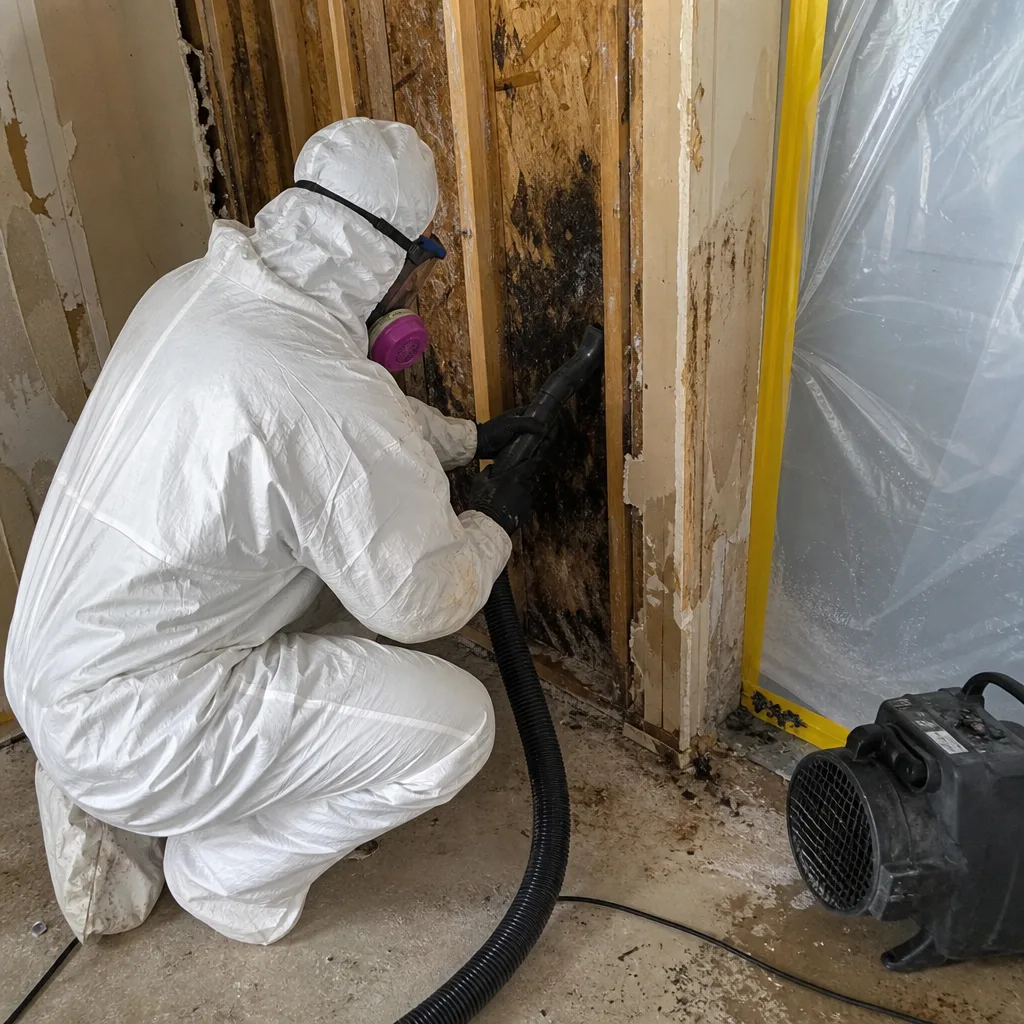
- Stop. Do not attempt to dry or clean without professional assessment. At 20% wood moisture content, fungal colonization is likely active. Disturbing materials without containment spreads spores.
- Photograph the area, note the reading, and call for inspection. Mold Remediation in Chula Vista requires containment, negative air pressure, and proper disposal; self-remediation often makes contamination worse and voids insurance coverage.
- Do not run HVAC if mold is suspected in ducts or near returns. This distributes contamination throughout the home.
Slab Relative Humidity Above 85%
- Verify probe placement: 40% depth of slab, equilibrated 72 hours. Surface readings are meaningless.
- Check for recent rain, irrigation, or plumbing leak in the 48 hours prior. Temporary spikes occur and resolve.
- If reading persists, test at multiple locations. Isolated high readings suggest a point source leak; uniform elevation indicates capillary moisture or missing vapor barrier.
- Before installing flooring, any reading above 75% requires remediation: topical sealers, vapor barrier installation, or dehumidification. Flooring installed over elevated slab RH will fail, and manufacturer warranties are void.
Sudden Water Loss Event (Pipe Burst, Appliance Failure, Weather Intrusion)
- Stop the source if safe: shutoff valve, breaker, or main water service.
- Document before moving anything: photograph standing water, damaged materials, and source. These are the most important photos for your claim.
- Extract standing water if you have a wet/dry vacuum. Do not use household vacuums.
- Call for professional extraction and drying. Speed matters: mold growth begins 48-72 hours after water intrusion in Chula Vista’s climate. Fire & Smoke Damage Restoration in Chula Vista and water damage services operate 24 hours with live dispatch.
Common Mistakes to Avoid
- Relying on smell or touch instead of numbers. Drywall can feel dry at 18% moisture content, well into the range that supports mold growth. Only a meter reading qualifies as documentation.
- Logging once and never updating. A single baseline from move-in date becomes stale and loses credibility. Insurers question whether conditions have changed.
- Using the same threshold year-round. Chula Vista’s summer marine layer pushes normal readings 2-3 points higher than winter. A fixed threshold produces false alarms or missed problems.
- Photographing without the meter in frame. A photo of a wall proves nothing. A photo showing the meter display, the probe location, and a recognizable room feature creates authentic documentation.
- Ignoring slab edge conditions in 1970s-1990s homes. This construction era in Chula Vista has the highest frequency of capillary moisture problems we encounter. The slab edge is not foundation; it is a water management detail that fails silently.
- Storing records only on paper or a single phone. Paper burns, floods, or is lost. Phones are replaced. Cloud storage with automatic sync survives the loss that makes the documentation necessary.
- Waiting for visible damage before acting. By the time water is visible, the damage is advanced and the remediation cost is tripled. The checklist exists to find problems before they announce themselves.
When to Call a Professional
Call when a reading exceeds threshold and the source is not immediately identifiable and correctable. Call when multiple readings trend upward over two quarters. Call when any material exceeds 20% moisture content or when mold is visible or suspected. Call after any sudden water loss where affected area exceeds a single bathroom or where water has been standing more than a few hours.
Professional assessment in Chula Vista should include thermal imaging to trace moisture migration, a written scope of required work, and a fixed price before any equipment is deployed. Anything less leaves you exposed to scope creep and disputed invoices. See our Damage Restoration Cost Breakdown: The Chula Vista Homeowner’s Reference for 2026 to understand typical pricing.
DryMark Restoration Chula Vista offers free estimates in Chula Vista. Our assessments include documented moisture readings, thermal imaging, and a written scope with fixed pricing under Haven Standard, Clause 1. Call (619) 486-5459. Live phone coverage is available 24 hours a day, 7 days a week with no voicemail on emergency lines. Explore more guides & resources on protecting your home. Every job is quoted in writing before work begins, documented with a photo record on every visit, and covered by the 365-Day Done Right Promise. A Free Second Opinion on any competitor’s written estimate is available at no charge.
Frequently Asked Questions
A pin-type moisture meter suitable for homeowner baseline logging costs $40-$80. Home Depot on Broadway and Lowe’s on H Street both carry General Tools and Extech models in stock. For professional-grade accuracy matching our Dri-Eaz and Phoenix documentation standards, the Delmhorst BD-210 runs approximately $325 and is available through restoration supply houses in San Diego County. Call (619) 486-5459 if you’d like guidance on model selection for your specific home construction.
Most California homeowner policies do not explicitly require professional documentation for pre-loss condition evidence. Authentic, dated, and relevant records are admissible. The key factors are contemporaneity (created before the loss) and methodology (consistent, labeled, with photographs). We have seen claims adjusters accept homeowner logs that meet these standards and reject professional reports that lack them. The Haven Standard documentation protocols we use on every job are designed to exceed insurer expectations, whether created by a homeowner or our technicians.
Chula Vista’s coastal humidity requires quarterly inspection of moisture-prone components, where inland desert climates may allow semiannual checks. The marine layer, particularly in neighborhoods west of Interstate 5 and near the bay, sustains higher ambient moisture that masks slow leaks. Eastlake and Rolling Hills Ranch, at slightly higher elevation, behave more like inland conditions but still require quarterly slab perimeter checks due to the clay soils common to those developments.
Visible mold growth requires professional remediation regardless of moisture reading. For concealed cavities, sustained readings above 20% in wood or 16% in drywall for more than 48 hours create conditions where mold colonization is likely active. Do not attempt to dry and seal walls where mold is suspected; this traps active growth and often makes contamination worse. Our mold remediation in Chula Vista includes containment, negative air pressure, and documented clearance testing to IICRC standards.
No. Smartphone apps that claim to measure moisture use capacitive sensing through the screen or case, with accuracy insufficient for documentation purposes. They are not calibrated to material type and do not penetrate surfaces. An insurer would correctly reject such readings as unreliable. The $60 pin meter is the minimum credible instrument.
Yes. We provide pre-loss assessment services that establish baseline moisture readings with calibrated instruments, produce photo-documented reports formatted for insurer submission, and include a written scope of any recommended preventive work with fixed pricing. The service is particularly valuable for homes with prior water damage, planned flooring installation, or complex construction with multiple potential intrusion points. Call (619) 486-5459 to schedule; estimates are free.
The Bottom Line
A water damage maintenance checklist without numbers is a wish. In Chula Vista’s coastal climate, where normal moisture content runs higher than national standards assume, only documented baseline readings create defensible proof of pre-loss condition. The six intrusion points identified here, specific to local construction from the 1970s through 1990s, account for the majority of preventable damage we encounter. Quarterly logging with a $60 pin meter, stored in cloud format with embedded dates, transforms a vague intention into evidence that insurers recognize. The time invested, approximately two hours per quarter, pays for itself if it prevents a single disputed claim or catches a slow leak before it requires mold remediation. Start with the kitchen and bathrooms this quarter. Expand to the full checklist next. The reading you log today is the documentation that protects your claim tomorrow.
Written by Alicia Brennan, Owner at DryMark Restoration Chula Vista, serving Chula Vista since 2011.